About hydrolic Rubber Lab Press Machine
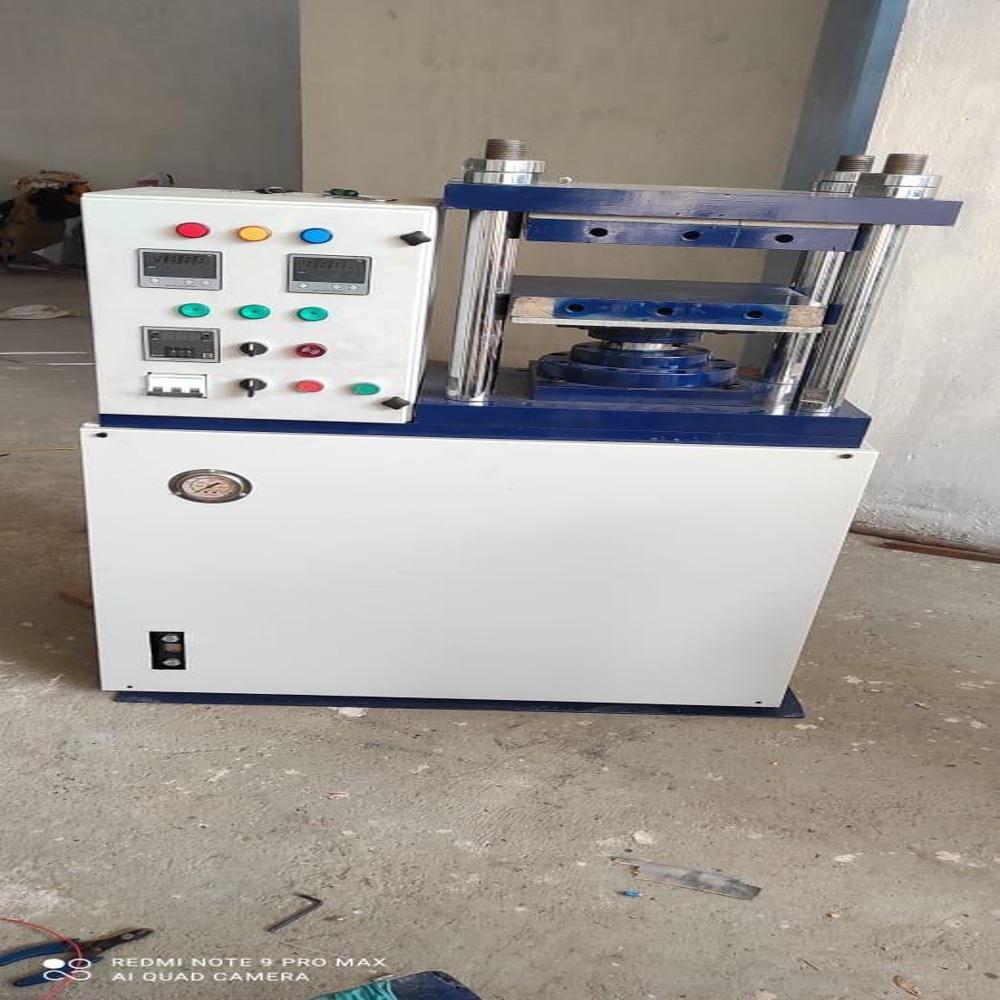
Lab press machines for rubber testing, or
hydraulic laboratory presses, are essential for curing, molding, and preparing rubber specimens, conforming to standards like ASTM D3182. They use heat and pressure to vulcanize raw rubber into testable sheets or buttons, with common features including digital PID controllers, precise temperature regulation (0.5C), and capacities ranging from small benchtop (200kN) to heavy-duty floor models (1000kN+).
Rugged Build for Demanding ApplicationsConstructed from heavy-duty welded mild steel, this hydraulic press machine guarantees stability and long-term performance, even under high pressure. The powder-coated surface enhances durability and provides excellent resistance to wear and corrosion, making it suitable for rigorous industrial use.
Precision Control and Efficient OperationFeaturing a semi-automatic manual/push button control system, this press offers precise control over the pressing process. The electric heating method ensures consistent preheating temperatures, optimizing material processing and ensuring high-quality outputs for molding, forging, and bending.
FAQ's of hydrolic Press Machine:
Q: How is the hydraulic press machine operated?
A: The machine is operated using a manual or push button control system, allowing operators to manage pressing actions with precision and safety during semi-automatic processes.
Q: What types of materials and applications is this press suitable for?
A: With its robust 50-ton capacity and 250 bar maximum pressure, this hydraulic press is ideal for tasks such as molding, forging, punching, and bending a variety of materials within industrial settings.
Q: When should I use the preheating plate, and what is its size?
A: The preheating plate, sized at 450 mm x 600 mm, should be used when your application requires uniform heating-beneficial for processes like molding and forging to ensure even material quality.
Q: Where can this hydraulic press machine be installed?
A: Due to its standard dimensions (1600 mm x 600 mm x 800 mm) and moderate weight (1200 kg), the machine can be easily integrated into industrial workshops, manufacturing plants, and fabrication units across India.
Q: What is the process for maintaining this press machine?
A: Regular maintenance involves checking oil levels in the 80-liter tank, ensuring the electric heating system functions properly, and inspecting all mechanical joints and controls for optimal operation and safety.
Q: What are the benefits of using a powder-coated hydraulic press machine?
A: Powder coating provides a protective layer that enhances the machine's resistance to rust, corrosion, and surface wear-extending operational life and maintaining its professional appearance.
Q: Is specialized training required to use this semi-automatic hydraulic press machine?
A: Basic instruction is recommended for safe and effective operation, but advanced technical training is not mandatory due to its user-friendly manual and push button controls.





 Send Inquiry

 Send Inquiry
 Send Inquiry
 Send SMS