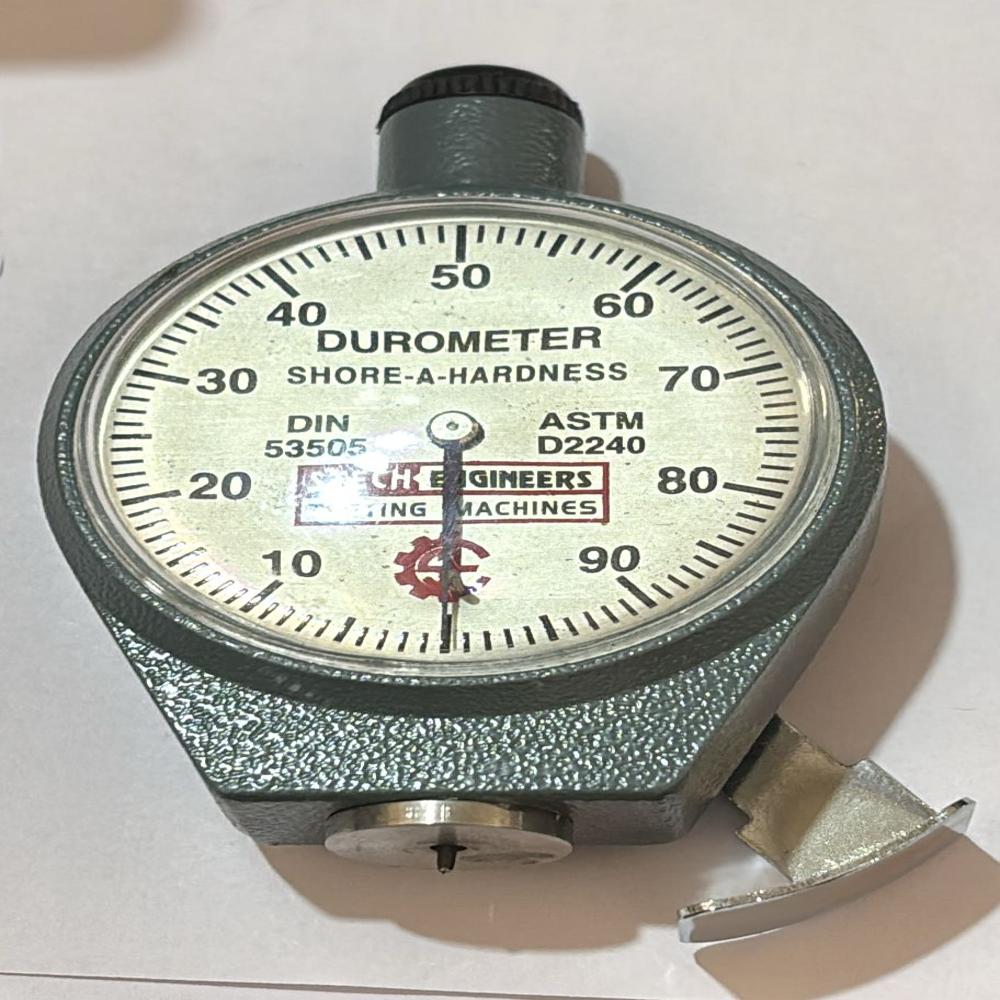
About Hardness Tester
A hardness tester is a device used to measure a material's resistance to permanent deformation, which provides insight into its mechanical properties like strength and durability. These testers come in various types tailored to different materials and applications, ranging from portable handheld devices for on-site use to stationary benchtop machines for laboratory testing.
Reliable Digital Hardness Testing AnywhereExperience fast, precise hardness measurements with our portable Leeb Rebound Hardness Tester. Always ready for onsite inspections, this device features a clear digital LCD for effortless data reading, while a generous memory holds up to 500 test groups. With compliance to international standards and a sturdy build, it perfectly suits manufacturing, quality control, and maintenance needs.
User-Friendly and Versatile DesignWith 360-degree testing capability and a convenient size of 220 x 70 x 130 mm, this tester is easy to handle in tight spaces. Its manual operation requires no special computerized setup, ensuring reliable results for workshops and field engineers. Lightweight at 2.5 kg, it supports efficient testing from -10C to 50C in various industrial environments.
Ideal for Indian Industry RequirementsMatching the needs of Indian manufacturers, service providers, suppliers, and traders, this hardness tester works seamlessly with 220 V, 50 Hz power systems. Its accuracy and adherence to ASTM and DIN standards ensure confidence for all users across India, making it a preferred choice for mild steel and similar materials.
FAQ's of Hardness Tester:
Q: How does the Leeb Rebound Method work in this hardness tester?
A: The Leeb Rebound Method measures material hardness by propelling an impact body against the sample surface and evaluating the rebound velocity. This value, represented in HL, correlates directly to the material's hardness, providing rapid and precise results in the field.
Q: What materials can I test with this portable hardness tester?
A: This tester is designed primarily for mild steel, but it can be used on a range of metallic materials within a hardness capacity of 0-3000 HB, making it versatile for various applications.
Q: When should I use a portable hardness tester instead of a stationary system?
A: A portable hardness tester is ideal for on-site inspections, large or immovable components, and situations where quick, non-destructive testing is needed without shifting the sample to a laboratory.
Q: Where can I access stored test data and how many results can it store?
A: The device stores up to 500 test results, which can be viewed on the digital LCD display for immediate reference or quality records. Data can be accessed on the unit directly for convenience during inspections.
Q: What is involved in the process of measuring hardness with this tool?
A: Simply power on the tester using AA batteries, choose your test direction, and place the device against the prepared material surface. After triggering the test, the LCD display shows your hardness reading instantly.
Q: How does this tester benefit Indian industries?
A: Complying with ASTM A956 and DIN 50156, the tester provides accuracy and reliability required by Indian standards. Its portability, data storage, and robust design support efficient, quality-driven operations across manufacturing, supply, and service sectors.





 Send Inquiry

 Send Inquiry
 Send Inquiry
 Send SMS
 Call Me Free